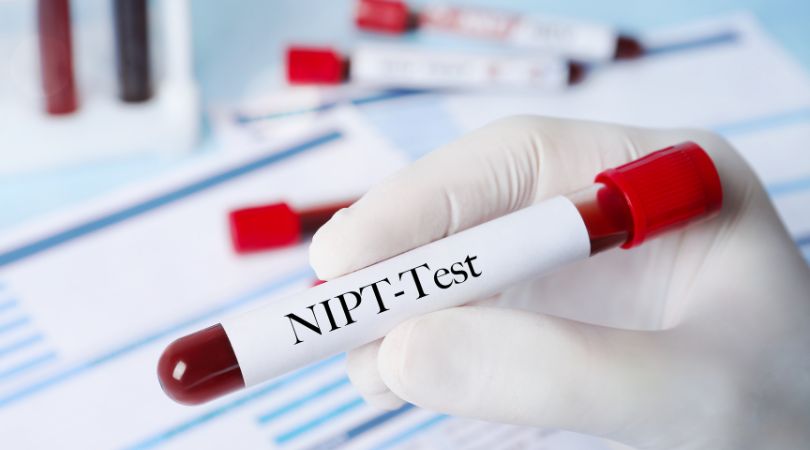
The NIPT test is a prenatal blood screening that detects specific chromosomal conditions by examining fetal DNA in the mother’s blood. It is highly accurate—over 99% for certain conditions—when done after 10 weeks. While it can also determine gender, its main goal is to assess your baby’s health.
Pregnancy is filled with new experiences, decisions, and moments of anticipation. One of the first things many parents are introduced to is prenatal testing, including the NIPT test. While it’s often linked to discovering your baby’s gender, the NIPT test actually serves a much more important purpose. It provides early insight into your baby’s development, helping you feel informed and supported as your pregnancy progresses.
What Is the NIPT Test?
NIPT stands for Non-Invasive Prenatal Testing. It’s a straightforward blood test that can be performed as early as 10 weeks of pregnancy.
During pregnancy, tiny pieces of your baby’s DNA naturally move through your bloodstream. NIPT examines this cell-free fetal DNA to determine the chances of specific chromosomal conditions.
What Does the NIPT Test Screen For?
The NIPT test screens for certain chromosomal conditions by analyzing your baby’s DNA.
| Condition | What It Means |
| Down Syndrome (Trisomy 21) | Extra copy of chromosome 21 |
| Trisomy 18 | Affects development and organ function |
| Trisomy 13 | A rare condition affecting multiple systems |
| Sex Chromosome Differences | Variations involving X and Y chromosomes |
NIPT helps evaluate the probability of specific chromosomal conditions early in pregnancy, offering valuable insight for your care journey.
How Accurate Is the NIPT Test?
The NIPT test is one of the most accurate prenatal screening tools available today.
| Factor | What to Know |
| Accuracy for Down syndrome | Over 99% |
| Accuracy for other conditions | High, but slightly lower |
| Best timing | After 10 weeks of pregnancy |
| Type of test | Screening (not diagnostic) |
NIPT offers a high level of accuracy, especially when performed at the right time, but results should always be reviewed with your healthcare provider.
Why Is the NIPT Test Important?
The NIPT test is important in early pregnancy care because it provides information to help guide your journey.
| Benefit | What It Means for You |
| Early awareness | Provides insight in the first trimester |
| Reassurance | Helps many parents feel more confident |
| Safe and non-invasive | No risk to your baby |
| Supports informed care | Helps guide next steps if needed |
The NIPT test provides both medical insights and emotional comfort during early pregnancy.
Does the NIPT Test Reveal Gender?
Yes, the NIPT test can also indicate your baby’s gender by identifying the presence or absence of a Y chromosome.
However, this is regarded as a secondary benefit. The main purpose of NIPT is to screen for chromosomal conditions and promote your baby’s health.
Other Ways to Find Out Your Baby’s Gender
If determining your baby’s gender is your main intention, there are other options available that focus specifically on that experience.
UC Baby offers two services designed for expecting parents who wish to learn their baby’s gender:
| Option | When Available | Experience |
| Early Reveal Blood Test | From 7 weeks | Early insight through a simple test |
| Gender Reveal Ultrasound | From 16 weeks | Visual confirmation and bonding experience |
These options emphasize the experience of discovering your baby’s gender, rather than medical screening.
This experience goes beyond results—it allows you to:
- See your baby moving in real time
- Share the moment with your partner or family
- Create a meaningful memory during your pregnancy
Learn more: UC Baby Gender Reveal Services
Understanding Your Baby’s Development
Around the time NIPT is performed, your baby is already developing quickly.
At 10–12 weeks:
- Major organs are forming
- Facial features are beginning to take shape
- Your baby is moving, even if you can’t feel it yet
While NIPT offers valuable insights into your baby’s health, many parents look forward to witnessing these developments during a pregnancy ultrasound.
The Role of Ultrasound in Your Pregnancy Journey
Ultrasound is a vital part of pregnancy, providing a visual link to your baby’s growth and development. It enables you to:
- Monitor your baby’s progress
- Confirm developmental milestones
- Experience moments of connection
Many families opt for a 3D or 5D ultrasound later in pregnancy to see their baby’s features more clearly and enjoy a more immersive experience.
Learn more: Pregnancy Ultrasound Timeline: When You Can See Your Baby Week by Week
What to Expect During a UC Baby Ultrasound
At UC Baby, ultrasound sessions are designed to be both informative and memorable.
During your visit, you can expect:
- A welcoming and comfortable environment
- Experienced ultrasound technicians
- Advanced 3D, 4D, and 5D HD ultrasound technology
- Time to enjoy and connect with your baby
These sessions offer a chance to pause and cherish the experience of seeing your baby before birth.
Learn more: What to Expect at Your 3D / 5D Ultrasound Appointment
Why Parents Across Canada Choose UC Baby
UC Baby is trusted by families across Canada for its focus on both quality and experience.
Parents appreciate:
- Clear, high-quality ultrasound images
- A calm, family-friendly setting
- The ability to include loved ones
- Convenient locations nationwide
It’s a place where medical insight and emotional connection come together.
Learn more: Why UC Baby Experience Is Truly Worth it
Frequently Asked Questions
-
1Is the NIPT test always accurate?
NIPT is highly accurate, especially for Down syndrome, but it is still a screening test and not diagnostic.
-
2When should I take the NIPT test?
It is typically done after 10 weeks of pregnancy.
-
3Is the NIPT test safe?
Yes, it is completely non-invasive and safe for both mother and baby.
-
4Can I rely on NIPT for gender results?
It is very accurate, but gender is not the main purpose of the test.
-
5Do I still need an ultrasound after NIPT?
Yes, ultrasound plays an essential role in monitoring your baby’s growth and development.
-
6How much does the NIPT test cost in Canada?
The cost of the NIPT test in Canada typically ranges from $300 to $600, depending on the provider and the type of screening included. More comprehensive panels may cost more. Costs can vary by province and clinic, so it’s a good idea to check with your healthcare provider or testing centre for specific pricing.
-
7Is the NIPT test covered by publicly funded healthcare in Canada?
In some cases, the NIPT test is covered by publicly funded healthcare in Canada, particularly for higher-risk pregnancies. For many parents, it is offered as a private option. Coverage varies by province, so it’s a good idea to speak with your healthcare provider about your options.
Conclusion
The NIPT test is a crucial part of modern prenatal care, providing early and reliable insights into your baby’s health. It helps parents feel informed, supported, and prepared as their pregnancy advances.
At the same time, pregnancy is also about connection—seeing your baby, watching them move, and sharing those moments with loved ones.
Recommended Readings:
Prenatal Testing in Canada: NIPT, Screening & Complete Guide
Prenatal Screening Ontario. “Non-Invasive Prenatal Testing (NIPT).

We use cookies to manage your chat session while you interact with our website. These cookies help us store temporary session data, such as your chat history, for predefined number of days. No personal information is stored in these cookies. By continuing to use this site, you consent to the use of cookies. For more details, please refer to our Privacy Policy


 Invitez familles et amis à assister à cet événement mémorable de votre grossesse. Célébrez avec vos proches où qu’ils soient dans le monde ce moment spécial de lien avec l’enfant.
 Rien n’est plus beau que les battements de cœur de votre bébé. Enregistrez ce son pour toujours dans un Ourson Coup de cœur de UC Baby®. Il ne s’agit pas simplement d’un beau souvenir, mais aussi d’un moyen efficace qui apaise votre bébé pour l’aider à s’endormir.